
Pool Stabilizer (Cyanuric Acid) Explained: How Much Is Right?
Stabilizer protects your chlorine from the sun, but too much of it can quietly stop your chlorine from working.
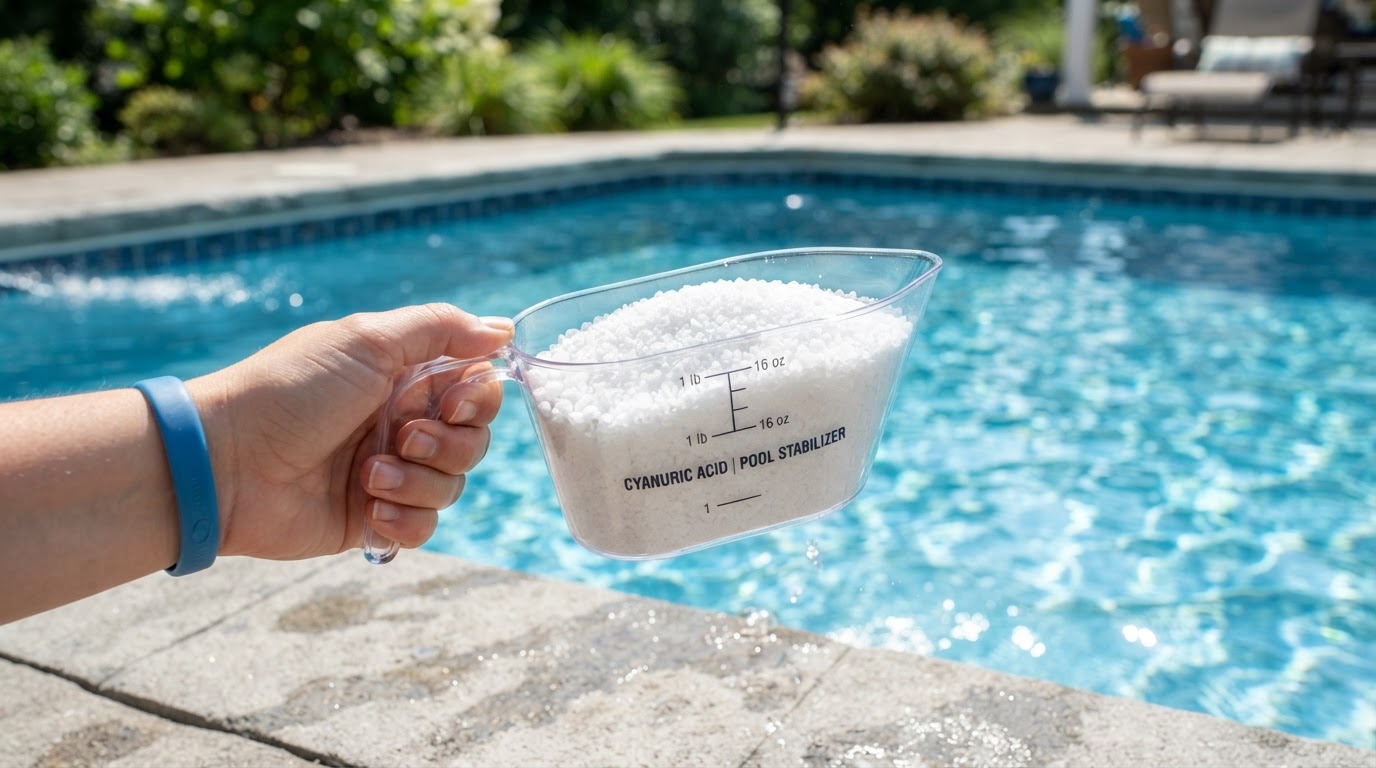
Pool stabilizer, also called cyanuric acid or CYA, shields chlorine from the sun's UV rays so it lasts longer in an outdoor pool. A common target for traditional chlorine pools is 30 to 50 ppm. Salt systems often recommend a higher range, so check your system's manual. Too little stabilizer and chlorine burns off within hours on a sunny day. Too much and chlorine becomes far less effective, even when your test shows chlorine in the pool.
What stabilizer does
Sunlight breaks down unprotected chlorine fast. On a bright Georgia day, a pool with no stabilizer can lose most of its chlorine in just a few hours. Stabilizer bonds loosely with chlorine and protects it from the sun, so it stays in the water longer and you use less of it.
Too low vs too high
| Stabilizer too low | Stabilizer too high | |
|---|---|---|
| What happens | Chlorine is burned off quickly by the sun | Chlorine is held back and works much more slowly |
| What you notice | Chlorine drops fast on sunny days | Cloudy water or algae even when chlorine seems fine |
| The fix | Add stabilizer gradually | Partially drain and refill with fresh water |
Why stabilizer builds up
Stabilizer does not evaporate or get used up like chlorine. It stays in the water until water leaves the pool through splash-out, backwashing or draining. Some of the most popular chlorine products also add stabilizer every time you use them, including chlorine tablets and many stabilized shock products. Over a season, stabilizer can creep higher and higher without you noticing. Read our guide to how to shock your pool to see which shock types add stabilizer.
Not sure where your stabilizer is? Bring a water sample to our Alpharetta store at 2900 Holcomb Bridge Rd for a free computerized water test and we will tell you where you stand.
The higher your stabilizer, the more chlorine you need
Stabilizer and chlorine work as a pair. As stabilizer rises, a larger amount of chlorine is needed to do the same job. That is why a pool with very high stabilizer can turn green or cloudy even when a test shows chlorine present. Keeping stabilizer in range keeps your chlorine working efficiently.
How to raise stabilizer
- Test first so you know how much you need for your pool's volume.
- Add stabilizer gradually, following the label. Many products dissolve slowly, so give them time.
- Avoid backwashing for a few days after adding it, so it is not washed out before it dissolves.
- Retest after about a week before adding more.
Use our Pool Calculator to find your pool's volume.
How to lower stabilizer
The most reliable way to lower stabilizer is to partially drain the pool and refill it with fresh water. How much water you replace depends on how high the level is. Products that claim to reduce stabilizer exist, but results vary. If you are unsure how much water to replace, bring a sample in and we will help you work it out.
Saltwater pools and stabilizer
Saltwater pools still need stabilizer, since the chlorine a salt cell produces is also broken down by the sun. Many salt systems recommend a higher stabilizer range than traditional chlorine pools, so always check your system's manual. Read our guide to saltwater vs chlorine pools.
Frequently asked questions
Check your stabilizer for free
Bring a water sample to Pool Supply Atlanta, 2900 Holcomb Bridge Rd, Alpharetta, GA 30022 for a free computerized test. Open Monday to Friday 9am to 5pm and Saturday 9am to 4pm. Serving Alpharetta, Roswell, Milton, Johns Creek and Sandy Springs. Questions? Call 678-691-6124.
New to pool chemicals? Start with our pool chemical basics guide.
Related Pool Articles
The Ultimate Atlanta Spring Pool Opening Checklist (2026 Edition)
Spring weather in North Georgia comes early! Here is your step-by-step checklist to open your Alpharetta or Roswell pool crystal clear.
How to Clear Green Pool Water Fast in Georgia Summer Heat
Hot Georgia sun and sudden thunderstorms can turn a pool green overnight. Follow our proven 4-step green-to-clean recovery plan.