
Saltwater vs Chlorine Pools: What's the Real Difference?
Saltwater pools are not chlorine-free. Here is how they work and how they compare to traditional chlorine pools.
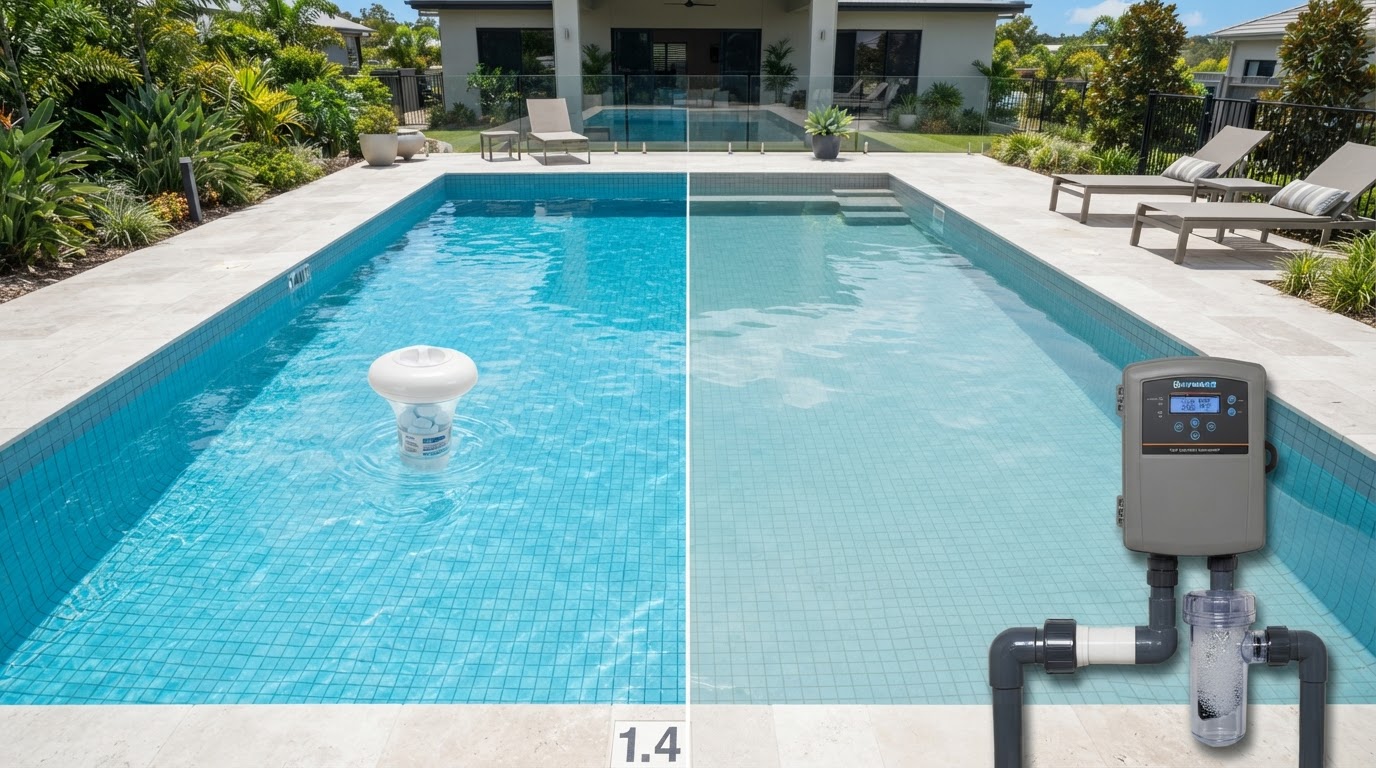
A saltwater pool is still a chlorine pool. A salt system uses a salt cell to turn dissolved salt into chlorine automatically, instead of you adding chlorine by hand. Saltwater pools usually feel softer and keep chlorine steadier, but the salt cell needs maintenance and eventual replacement, pH tends to rise and many cells slow down or stop in cold water. Both types still need regular testing and balancing.
How a salt system works
Salt is added to the pool water at a low level, far less salty than the ocean. As water passes through the salt cell, an electrical charge converts some of the salt into chlorine. That chlorine sanitizes the pool, then turns back into salt, and the cycle repeats.
Side by side
| Comparison | Saltwater pool | Traditional chlorine pool |
|---|---|---|
| How chlorine is added | Made automatically by the salt cell | Added by hand with tablets, liquid or granular |
| Chlorine levels | Steadier day to day | Can rise and fall between additions |
| Feel | Often described as softer | Can feel harsher if levels swing |
| Upkeep | Cell cleaning, salt level checks, eventual cell replacement | Regularly buying and adding chlorine |
| pH | Tends to rise and needs regular lowering | Depends on the chlorine type used |
| Cold weather | Many cells slow down or stop in cold water | No change in how chlorine is added |
What saltwater pools still need
- Regular testing of chlorine, pH, alkalinity, calcium and stabilizer.
- Salt level checks, using the range in your system's manual.
- Cell inspection and cleaning to remove scale.
- Occasional shocking after heavy use or rain.
Read our pool chemical basics guide and our guide to balancing pH and alkalinity.
Have a saltwater pool, or thinking about one? Bring a water sample to our Alpharetta store at 2900 Holcomb Bridge Rd for a free computerized water test and honest advice.
Saltwater pools in a Georgia winter
Many salt cells reduce or stop chlorine production when the water gets cold, often around 60 degrees. Check your system's manual. That means a saltwater pool kept open through a North Atlanta winter may need chlorine added another way until the water warms up. Keep testing through winter. Read our guide to algae in winter.
Scale and saltwater pools
Because pH tends to rise in saltwater pools, scale can build up on the salt cell, the pool surface and the heater. Keeping pH, alkalinity and calcium in range protects your cell and finish. Read our guide to calcium hardness and scaling.
Which is right for you?
Saltwater suits owners who want steadier chlorine and softer-feeling water with less hands-on chlorine handling. Traditional chlorine suits owners who want a simpler system with no cell to maintain. Either can keep a pool beautiful when tested and balanced regularly.
Frequently asked questions
Saltwater or chlorine, we can help
Pool Supply Atlanta helps pool owners across Alpharetta, Roswell, Milton, Johns Creek and Sandy Springs. Visit us at 2900 Holcomb Bridge Rd, Alpharetta, GA 30022 (Mon to Fri 9am to 5pm, Sat 9am to 4pm) or call 678-691-6124.
Related Pool Articles
The Ultimate Atlanta Spring Pool Opening Checklist (2026 Edition)
Spring weather in North Georgia comes early! Here is your step-by-step checklist to open your Alpharetta or Roswell pool crystal clear.
How to Clear Green Pool Water Fast in Georgia Summer Heat
Hot Georgia sun and sudden thunderstorms can turn a pool green overnight. Follow our proven 4-step green-to-clean recovery plan.