
Is My Pool Leaking or Evaporating? The Bucket Test
Every pool loses some water. Here is how to tell if yours is losing more than it should.
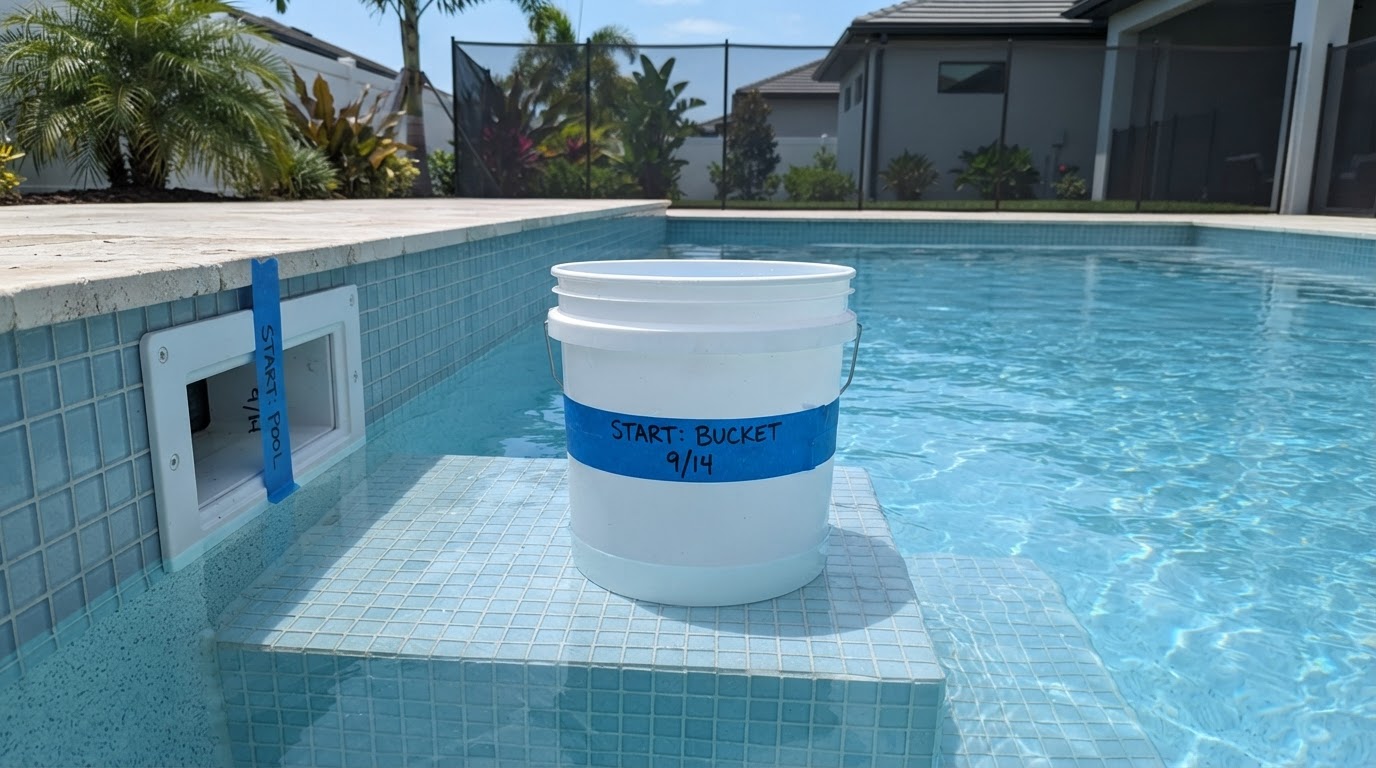
Every pool loses water to evaporation, especially on hot, sunny, windy days. To tell a leak from evaporation, do the bucket test: place a bucket of pool water on a pool step, mark the water level inside the bucket and the pool level outside it, and compare after 24 hours. If the pool drops noticeably more than the bucket, you likely have a leak. If they drop about the same, it is evaporation.
How much water loss is normal?
Evaporation depends on the weather. Pools lose more water on hot, sunny, dry and windy days, and much less in cool, cloudy or humid weather. Splashing, heavy swimmer use and backwashing your filter also lower the water level. A little loss is normal. Constant refilling, or water dropping fast in cool weather, is a warning sign.
How to do the bucket test
- 1Bring the pool to its normal water level and turn off any automatic water fill.
- 2Fill a bucket with pool water to about the same level as the pool.
- 3Place the bucket on the first or second pool step so it sits in the water, weighting it if needed so it stays put.
- 4Mark the water level inside the bucket.
- 5Mark the pool water level on the outside of the bucket or on the skimmer face with tape.
- 6Run your pump on its normal schedule and leave everything for 24 hours, ideally on a day with no rain.
- 7Compare the two marks. Because the bucket and pool are in the same conditions, they should lose about the same amount of evaporation.
Reading the results
| Result | What it likely means |
|---|---|
| Pool and bucket drop about the same | Normal evaporation |
| Pool drops noticeably more than the bucket | Likely a leak |
| Pool loses more with the pump running | The leak may be on the pressure side of the system, such as return lines |
| Pool loses more with the pump off | The leak may be on the suction side, such as skimmer or suction lines |
To narrow it down, repeat the test once with the pump running and once with the pump off.
Think you might have a leak? Call 678-691-6124 or stop by our Alpharetta store at 2900 Holcomb Bridge Rd. We will help you figure out your next step.
Other signs of a leak
- You are topping up the pool far more often than usual.
- Wet or soggy spots in the yard near the pool or plumbing.
- Water or drips around the pump, filter or valves.
- Cracks in the pool surface or loose tile.
- Air bubbles in the pump basket or the pump losing prime.
- Algae or chemistry problems that keep coming back as fresh water is constantly added.
Where pool leaks usually happen
- The equipment pad: pump seals, filter O-rings, valves and fittings. This is the easiest place to check first.
- Underground plumbing lines.
- The skimmer, where it meets the pool wall.
- Return fittings and pool lights.
- Cracks in the pool shell, sometimes after a hard freeze.
Start with the equipment pad. Many leaks there come down to worn seals or O-rings. Read our pool pump troubleshooting guide.
What not to do
Do not drain your pool to look for a leak. Draining an in-ground pool can damage the shell, especially after heavy rain. If the leak is not obvious at the equipment pad, a professional leak detection specialist can locate underground or structural leaks without draining.
After a freeze
Hard freezes can crack pipes and equipment. If you notice water loss after a cold snap, check the equipment pad first. Read our guide to freeze protection for pool equipment.
Frequently asked questions
Losing water?
Pool Supply Atlanta helps pool owners across Alpharetta, Roswell, Milton, Johns Creek and Sandy Springs. Visit us at 2900 Holcomb Bridge Rd, Alpharetta, GA 30022 (Mon to Fri 9am to 5pm, Sat 9am to 4pm) or call 678-691-6124.
Related Pool Articles
The Ultimate Atlanta Spring Pool Opening Checklist (2026 Edition)
Spring weather in North Georgia comes early! Here is your step-by-step checklist to open your Alpharetta or Roswell pool crystal clear.
How to Clear Green Pool Water Fast in Georgia Summer Heat
Hot Georgia sun and sudden thunderstorms can turn a pool green overnight. Follow our proven 4-step green-to-clean recovery plan.