
How Often Should You Test Your Pool Water? A Georgia Schedule
More often in summer, less in winter, but never "only when it turns green." Here is a simple schedule for Georgia pools.
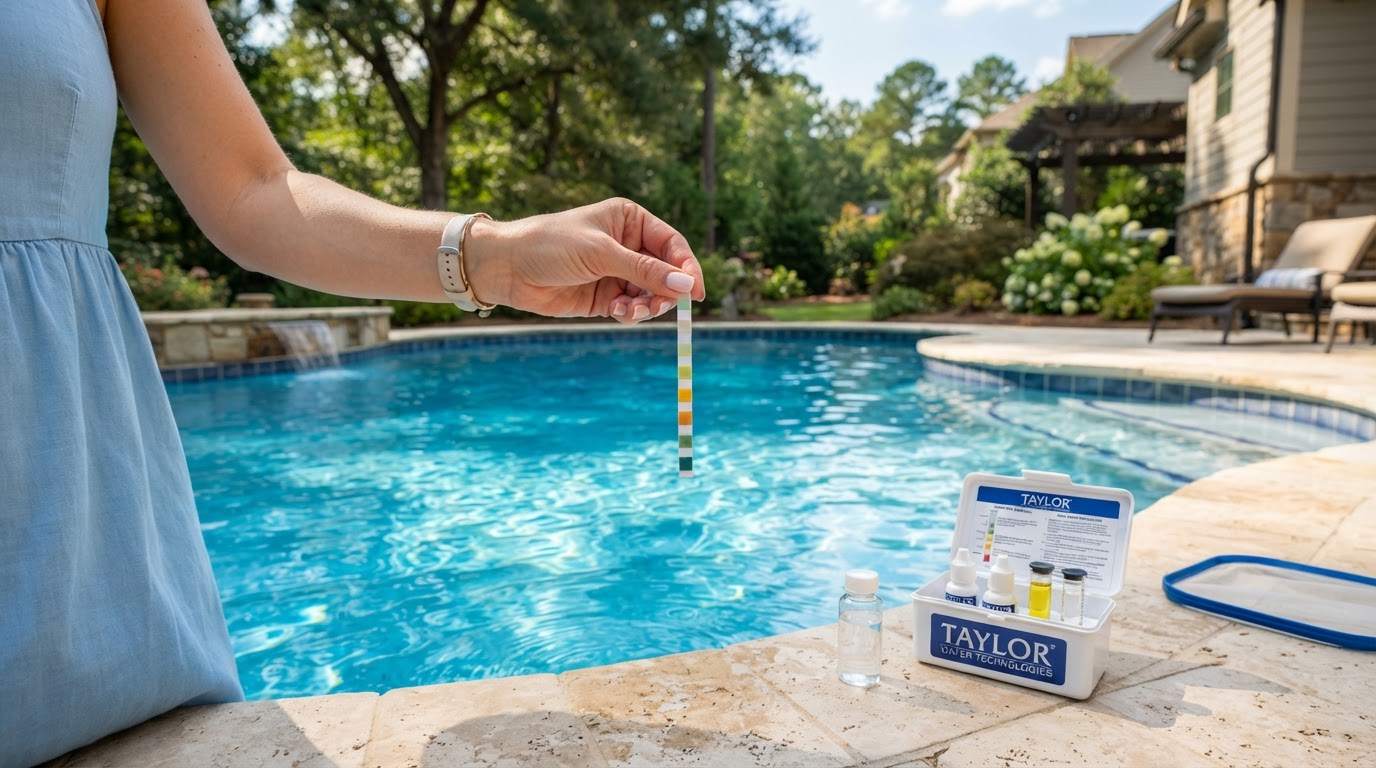
In Georgia, test chlorine and pH at home two to three times a week in summer, about once a week in spring and fall, and every one to two weeks in winter if your pool stays open. Check alkalinity, calcium and stabilizer less often, or get a professional water test every few weeks. Always test after heavy rain, a pool party, a heat wave, adding lots of fresh water or any time the water looks off.
Why regular testing matters
Pool water changes constantly. Sun burns off chlorine, rain dilutes it, swimmers and leaves add contaminants and pH drifts over time. Testing regularly lets you make small, easy adjustments instead of dealing with a green or cloudy pool, wasted chemicals or damage to your finish and equipment.
A seasonal testing schedule for Georgia
| Season | Chlorine and pH | Full balance (alkalinity, calcium, stabilizer) |
|---|---|---|
| Summer | Two to three times a week | Every two to four weeks, or a professional test |
| Spring and fall | About once a week | Every few weeks |
| Winter (pool open) | Every one to two weeks | Every month or so |
| Winter (pool closed) | Check during warm spells | At opening and closing |
Always test after these events
- Heavy rain or a storm
- A pool party or heavy swimmer use
- A heat wave or long stretch of hot, sunny days
- Adding a lot of fresh water
- Opening or closing the pool
- Water that looks cloudy, green or simply off
- Swimmers complaining of itchy skin or red eyes
Want an accurate full picture of your water? Bring a sample to our Alpharetta store at 2900 Holcomb Bridge Rd for a free computerized water test. We will explain your results and tell you exactly what to adjust.
Test strips, drop kits and professional tests
| Method | Good for | Keep in mind |
|---|---|---|
| Test strips | Quick, easy checks between visits | Colors can be hard to read accurately |
| Drop test kits | More precise home testing | Takes a little longer and needs care to read |
| Professional computerized test | Accurate readings across all key levels | Bring a sample to a pool store |
Many owners use strips or a drop kit at home for chlorine and pH, then get a professional test every few weeks for the full picture.
What to test each time
- Every time: free chlorine and pH. These change fastest and matter most day to day.
- Regularly: total alkalinity, which keeps pH steady.
- Less often: calcium hardness and cyanuric acid (stabilizer), which change slowly.
- Saltwater pools: check salt levels regularly as well.
Learn what each reading means in our guide to balancing pH and alkalinity and our pool chemical basics guide.
Keep a simple log
Write down your readings and what you added each time, even just in your phone's notes. Over a few weeks you will see patterns, like pH creeping up or chlorine dropping faster in hot weather, and you can adjust before problems start.
Winter testing in Georgia
Do not stop testing just because swim season is over. Mild winter days in North Atlanta give algae chances to grow. Read our guide to algae in winter.
Frequently asked questions
Testing made easy
Free computerized water testing at Pool Supply Atlanta, 2900 Holcomb Bridge Rd, Alpharetta, GA 30022. Open Monday to Friday 9am to 5pm and Saturday 9am to 4pm. Serving Alpharetta, Roswell, Milton, Johns Creek and Sandy Springs. Questions? Call 678-691-6124.
New to pool care? Start with our new pool owner guide.
Related Pool Articles
The Ultimate Atlanta Spring Pool Opening Checklist (2026 Edition)
Spring weather in North Georgia comes early! Here is your step-by-step checklist to open your Alpharetta or Roswell pool crystal clear.
How to Clear Green Pool Water Fast in Georgia Summer Heat
Hot Georgia sun and sudden thunderstorms can turn a pool green overnight. Follow our proven 4-step green-to-clean recovery plan.