
Acid Wash vs Resurfacing: Which Does Your Pool Need?
A stained, dull pool surface might need a deep clean, or it might need a whole new finish. Here is how to tell the difference.
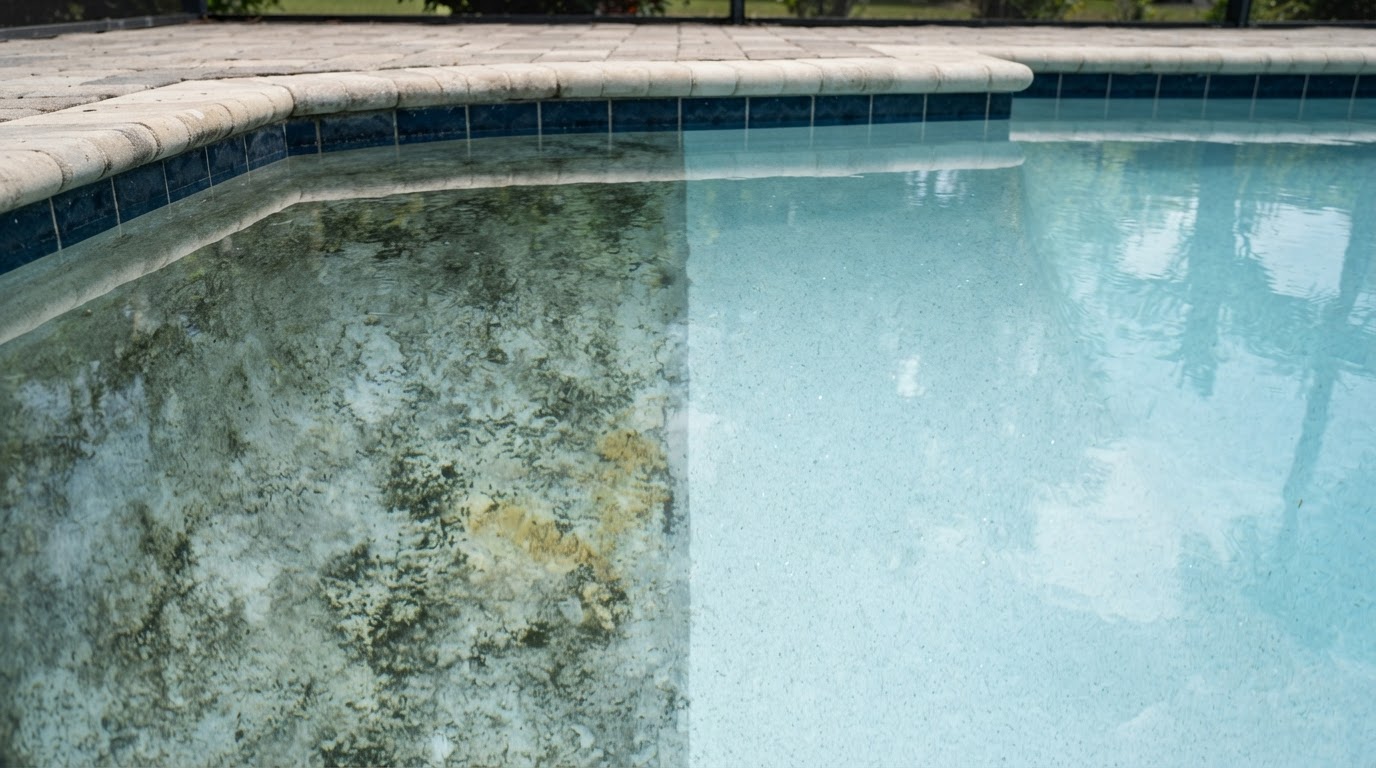
An acid wash strips a very thin layer off the surface of a plaster pool to remove stains and reveal cleaner plaster underneath. It is a cleaning treatment. Resurfacing replaces the worn finish entirely with new plaster, quartz or pebble. If your surface is stained but still smooth and solid, an acid wash may be enough. If it is rough, cracked, chipped, thin or delaminating, resurfacing is the real fix.
What an acid wash does
An acid wash is done on a drained plaster pool. A diluted acid solution is applied to the surface and rinsed off, removing a thin layer along with the stains in it. It can brighten plaster dulled by algae stains, mineral deposits or general discoloration. Because it removes a layer of plaster each time, a pool can only be acid washed a limited number of times over the life of the finish.
What resurfacing does
Resurfacing removes or prepares the old finish and applies a brand new one. It fixes surface problems that cleaning cannot touch, like roughness, cracks, chips and bare spots, and lets you choose a new finish and color. Read our guide comparing plaster, quartz and pebble finishes.
Side by side
| Acid wash | Resurfacing | |
|---|---|---|
| What it is | A deep cleaning treatment that removes a thin surface layer | A completely new interior finish |
| Fixes stains | Many surface stains | Yes |
| Fixes roughness, cracks, chips | No | Yes |
| Effect on plaster | Thins it slightly each time | Replaces it |
| Lifespan of the result | Until stains build up again | Years, depending on the finish chosen |
| Best for | A solid surface that is just stained or dull | A surface that is worn out, rough or damaged |
Signs an acid wash may be enough
- The surface is stained or discolored but still smooth to the touch
- No cracks, chips, hollow spots or bare patches
- The plaster has not been acid washed several times already
- Stains are on the surface rather than deep in the finish
Signs you need resurfacing
- Rough patches that scrape feet or snag swimsuits
- Cracks, chips or flaking
- Bare spots or delamination where the finish is lifting
- Plaster that is visibly thin or has been acid washed before
- Stains that come back quickly or will not come out
Not sure which your pool needs? Send us photos or stop by our Alpharetta store at 2900 Holcomb Bridge Rd. We will give you an honest answer, and we never sell work you do not need.
Try this first: treating stains without draining
Some stains can be treated with the pool still full. Metal stains from iron or copper and some organic stains respond to targeted stain treatments and a water chemistry adjustment. A water test can help point to the cause. Read about free pool water testing.
Before you drain your pool. Draining an in-ground pool is not something to do casually. Groundwater pressure can push an empty pool shell upward and cause serious damage, especially after heavy rain. Both acid washing and resurfacing should be handled by professionals who know how to drain safely and check for these conditions first.
Frequently asked questions
Get an honest assessment
Pool Supply Atlanta serves Alpharetta, Roswell, Milton, Johns Creek and Sandy Springs. Visit us at 2900 Holcomb Bridge Rd, Alpharetta, GA 30022 (Mon to Fri 9am to 5pm, Sat 9am to 4pm) or call 678-691-6124.
Planning tile work too? Read about pool tile replacement.
Related Pool Articles
The Ultimate Atlanta Spring Pool Opening Checklist (2026 Edition)
Spring weather in North Georgia comes early! Here is your step-by-step checklist to open your Alpharetta or Roswell pool crystal clear.
How to Clear Green Pool Water Fast in Georgia Summer Heat
Hot Georgia sun and sudden thunderstorms can turn a pool green overnight. Follow our proven 4-step green-to-clean recovery plan.